

What Is Bruner's Discovery Learning?
Bruner's discovery learning is an instructional approach where students actively explore concepts and construct knowledge through direct experience rather than passive reception. Jerome Bruner, a cognitive psychologist, argued that learners develop deeper understanding when they discover principles themselves instead of having information simply delivered to them. This method positions teachers as facilitators who guide inquiry rather than lecturers who transmit facts.
The core belief is simple yet transformative. When students wrestle with problems and arrive at solutions independently, they retain information longer and transfer knowledge more effectively. Discovery learning shifts the classroom dynamic from teacher-centered instruction to student-centered exploration.
Why Discovery Learning Matters in Today's Classrooms
Traditional instruction often treats students as empty vessels waiting to be filled. Discovery learning challenges this assumption by recognizing that children are natural problem-solvers. When educators create environments where students can explore, test hypotheses, and learn from mistakes, they develop critical thinking skills that extend far beyond memorized content.
Research consistently shows that active learning produces better outcomes than passive listening. Students who discover concepts themselves demonstrate stronger retention, improved problem-solving abilities, and greater motivation to learn. These benefits matter more than ever in a world that values adaptability and creative thinking over rote knowledge.
The approach also honors the reality that learning is messy. Students don't absorb information in neat, linear sequences. They build understanding through exploration, confusion, breakthrough moments, and gradual refinement of ideas.
Core Principles of Bruner's Discovery Learning Theory
Understanding the theoretical foundation helps educators implement discovery learning effectively. Bruner built his approach on several interconnected ideas about how humans learn.
Active Learning Through Direct Experience
Bruner insisted that students must actively engage with materials and concepts. Passive observation rarely leads to deep understanding. Instead, learners need hands-on experiences that allow them to manipulate variables, test ideas, and observe outcomes directly.
This principle doesn't mean students work without guidance. Teachers design structured experiences that lead students toward important discoveries while allowing room for individual exploration paths.
The Spiral Curriculum
One of Bruner's most influential contributions is the spiral curriculum concept. He proposed that students can learn any subject at any age if presented appropriately. Complex ideas should be introduced early in simple forms, then revisited repeatedly with increasing sophistication.
A third-grader can grasp basic multiplication concepts through grouping objects. That same student revisits multiplication in fifth grade through area models. By middle school, they explore algebraic applications. Each encounter builds on previous understanding while adding new layers of complexity.
This approach contradicts the notion that certain topics must wait until students reach specific developmental stages. Instead, it suggests that thoughtful scaffolding makes almost any concept accessible.
Three Modes of Representation
Bruner identified three ways humans represent and process information. Understanding these modes helps teachers design more effective discovery experiences.
Enactive representation involves learning through physical action. Young children learn about balance by using a seesaw, not by hearing explanations about fulcrums and force.
Iconic representation uses visual imagery and mental models. Students might draw diagrams, create concept maps, or visualize processes to understand relationships between ideas.
Symbolic representation employs abstract symbols like language and mathematics. This most sophisticated mode allows learners to manipulate complex ideas without concrete materials.
Effective instruction moves through these modes progressively. Students might first manipulate fraction tiles, then draw fraction models, and finally work with symbolic notation.
Scaffolding and Support
Discovery learning doesn't mean abandoning students to figure everything out alone. Bruner emphasized that teachers must provide appropriate scaffolding that supports exploration without removing the challenge.
Good scaffolding offers just enough structure to keep students productively engaged. It prevents frustration while preserving the satisfaction of genuine discovery. As students gain competence, teachers gradually remove supports.
How Discovery Learning Works in Practice
Theory becomes meaningful only when translated into classroom reality. Discovery learning looks different across subjects and grade levels, but certain patterns emerge.
The Teacher's Role as Facilitator
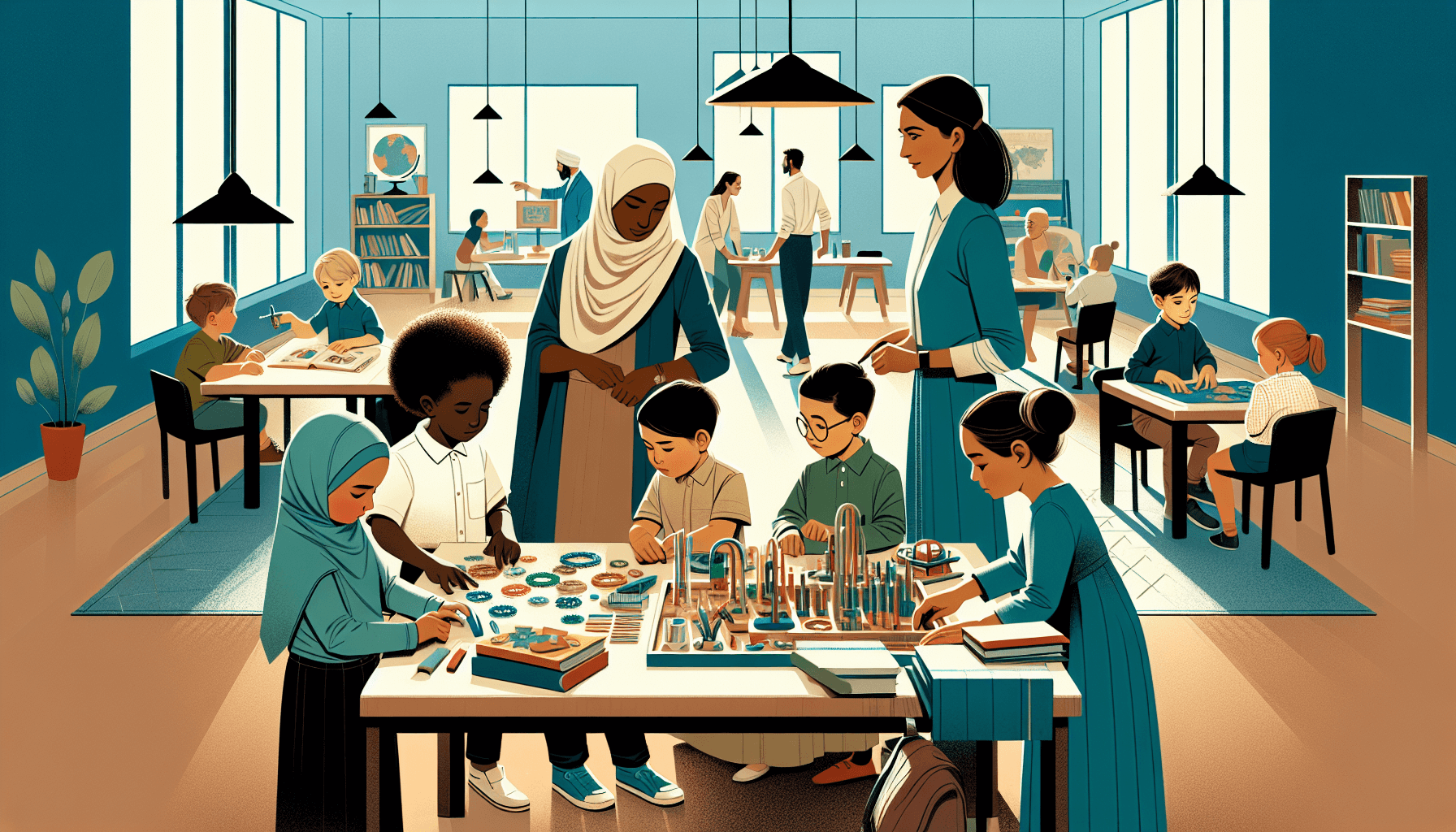
Teachers in discovery learning environments act as guides rather than information sources. They design rich learning experiences, ask probing questions, and help students reflect on their discoveries.
This role requires different skills than traditional instruction. Teachers must anticipate student thinking, recognize productive struggle, and know when to intervene versus when to step back. They create conditions for discovery rather than delivering predetermined conclusions.
Structuring Discovery Experiences
Effective discovery learning requires careful planning. Teachers select problems or phenomena that naturally lead students toward important concepts. The best discovery tasks have clear goals but multiple solution paths.
A science teacher might present students with various objects and a water tank, then ask which will float. Students make predictions, test them, and develop theories about density. The teacher guides discussion toward scientific principles without simply stating the rules.
Math teachers might give students pattern blocks and ask them to explore what happens when they combine different shapes. Through manipulation and observation, students discover geometric relationships and angle measurements.
Balancing Freedom and Structure
Pure discovery without guidance often leads to confusion and misconceptions. Bruner advocated for guided discovery where teachers provide structure while preserving student agency.
This balance is delicate. Too much structure removes the discovery element. Too little leaves students floundering. Skilled teachers adjust support based on student responses, offering hints when needed while resisting the urge to simply explain.
Discovery Learning Across Different Subjects
The approach adapts to various content areas, though implementation details differ.
Mathematics and Problem-Solving
Math naturally lends itself to discovery learning. Students can explore patterns, test conjectures, and develop algorithms through structured investigation. Instead of memorizing formulas, they derive principles through repeated examples and guided reflection.
A teacher introducing area might provide graph paper and ask students to find how many squares fit inside various rectangles. Through systematic exploration, students discover the length times width relationship themselves.
Science and Inquiry
Scientific inquiry aligns perfectly with discovery learning principles. Students form hypotheses, design experiments, collect data, and draw conclusions. They experience science as an active process of investigation rather than a collection of facts.
The key is selecting phenomena that reveal important principles through accessible investigation. Students might explore how different materials affect ice melting rates or investigate what factors influence plant growth.
Social Studies and Historical Thinking
Discovery learning in social studies involves analyzing primary sources, examining multiple perspectives, and drawing evidence-based conclusions. Students act as historians, interpreting artifacts and documents rather than simply reading textbook summaries.
Teachers might present photographs, letters, and newspaper articles from a historical period, asking students to piece together what was happening and why. This develops critical thinking and historical reasoning skills.
Language Arts and Meaning-Making
Reading comprehension and writing involve constant discovery as students construct meaning from text. Teachers can design experiences where students analyze author's craft, identify patterns in literature, or discover grammar rules through examples.
Rather than teaching vocabulary through definitions, students might encounter new words in context, make predictions about meaning, and refine understanding through multiple exposures.
Practical Strategies for Implementing Discovery Learning
Moving from theory to practice requires concrete strategies. These approaches help teachers create effective discovery learning experiences.
Start With Compelling Questions
Great discovery lessons begin with questions that spark curiosity. These questions should be open-ended enough to allow exploration but focused enough to lead toward important concepts.
Instead of asking students to memorize that plants need sunlight, pose the question: What happens if we grow plants in different light conditions? The investigation becomes the vehicle for learning.
Provide Appropriate Materials and Resources
Discovery requires tools for exploration. Teachers must carefully select materials that enable investigation while not overwhelming students with options.
Manipulatives, measuring tools, primary sources, and digital resources all support discovery when chosen thoughtfully. The materials should invite interaction and make abstract concepts tangible.
Use Strategic Questioning
Teacher questions guide discovery without removing challenge. Instead of telling students answers, ask questions that prompt deeper thinking.
When students struggle, resist the urge to explain. Instead ask: What have you tried? What patterns do you notice? How is this similar to something you've done before? These questions scaffold thinking while preserving the discovery process.
Build in Reflection Time
Discovery without reflection often leads to fragmented understanding. Students need time to process experiences, articulate discoveries, and connect new learning to existing knowledge.
After exploration, bring the class together to share findings. Guide discussion toward key concepts, helping students refine and formalize their discoveries. This consolidation phase transforms individual experiences into shared understanding.
Allow for Productive Struggle
Learning through discovery involves confusion and mistakes. Teachers must create classroom cultures where struggle is valued as part of learning rather than evidence of failure.
This requires patience and trust. When students grapple with challenging problems, they develop persistence and problem-solving skills. The key is ensuring struggle remains productive rather than devolving into frustration.
Benefits of Discovery Learning for Students
When implemented well, discovery learning produces outcomes that traditional instruction struggles to achieve.
Students develop deeper conceptual understanding because they construct knowledge actively rather than receiving it passively. This understanding proves more durable and transferable to new situations.
The approach builds intrinsic motivation. Discovery satisfies natural curiosity and provides the pleasure of figuring things out independently. Students become more engaged and take greater ownership of learning.
Critical thinking and problem-solving skills strengthen through repeated practice. Students learn to approach unfamiliar problems systematically, test ideas, and revise thinking based on evidence.
Discovery learning also develops metacognitive awareness. Students become more conscious of their thinking processes and learning strategies. They learn how to learn, not just what to learn.
Challenges and Limitations of Discovery Learning
Honest assessment requires acknowledging where discovery learning faces difficulties. No approach works perfectly in all situations.
Time and Curriculum Constraints
Discovery learning typically requires more time than direct instruction. Students need opportunities to explore, make mistakes, and refine understanding. This depth comes at the cost of breadth.
Teachers face pressure to cover extensive curriculum content. Discovery approaches may seem inefficient when measured by topics addressed. The trade-off is between superficial coverage and deep understanding.
Risk of Misconceptions
Without proper guidance, students may discover incorrect principles or develop misconceptions. Pure discovery can lead learners down unproductive paths.
This risk highlights the importance of guided discovery. Teachers must monitor student thinking, identify emerging misconceptions, and intervene strategically to redirect understanding.
Varying Student Readiness
Discovery learning assumes students possess prerequisite skills and knowledge. Students lacking necessary background may struggle unproductively.
Teachers must assess readiness carefully and provide additional support for students who need it. Differentiation becomes crucial in discovery learning environments.
Assessment Challenges
Traditional tests often fail to capture the deep understanding that discovery learning develops. Teachers need alternative assessment methods that evaluate thinking processes, not just final answers.
Performance tasks, portfolios, and observational assessments better measure discovery learning outcomes. However, these methods require more time and expertise to implement well.
Discovery Learning Compared to Other Educational Approaches
Understanding how discovery learning relates to other theories helps educators make informed instructional choices.
Discovery Learning vs. Direct Instruction
Direct instruction presents information explicitly and systematically. Teachers explain concepts, model procedures, and guide practice. This approach prioritizes efficiency and clear communication.
Discovery learning inverts this model. Students encounter concepts through exploration before formal explanation. The approach prioritizes understanding over efficiency.
Neither approach is universally superior. Direct instruction works well for procedural knowledge and foundational skills. Discovery learning excels at developing conceptual understanding and problem-solving abilities. Skilled teachers blend both approaches strategically.
Connection to Constructivism
Discovery learning aligns closely with constructivist theories. Both emphasize that learners actively construct knowledge rather than passively absorbing information.
Piaget's constructivism influenced Bruner's thinking significantly. However, Bruner placed greater emphasis on the role of culture and language in learning. He also focused more on practical instructional applications than Piaget.
Relationship to Inquiry-Based Learning
Inquiry-based learning shares many features with discovery learning. Both involve student-driven investigation and active knowledge construction.
The terms are often used interchangeably, though some distinguish them. Inquiry-based learning may involve more explicit teaching of scientific method and research skills. Discovery learning focuses more broadly on learning through exploration across all subjects.
Contrast With Montessori Method
Montessori education also emphasizes discovery through hands-on exploration. However, Montessori environments are more structured around specific materials and developmental sequences.
Bruner's approach applies more flexibly across traditional classroom settings. Montessori requires specialized materials and comprehensive environmental design.
Jerome Bruner: Background and Contributions
Understanding the theorist behind discovery learning provides valuable context for the approach.
Jerome Bruner was born in 1915 in New York City. He earned his doctorate in psychology from Harvard University in 1941. His early work focused on perception and cognition, but he became increasingly interested in educational applications of psychological research.
During the 1960s, Bruner played a central role in the cognitive revolution in psychology. He helped shift focus from behaviorist approaches toward understanding mental processes and meaning-making.
His 1960 book "The Process of Education" profoundly influenced educational practice. In it, he argued that any subject could be taught to any child at any age in some intellectually honest form. This controversial claim challenged prevailing assumptions about developmental readiness.
Bruner emphasized the importance of structure in learning. He believed that understanding the fundamental structure of a subject made learning easier and more transferable. This insight shaped his advocacy for discovery learning approaches.
Later in his career, Bruner focused on narrative and cultural aspects of learning. He argued that humans are natural storytellers who make sense of experience through narrative structures. This work expanded understanding of how context and culture shape learning.
Bruner remained intellectually active until his death in 2016 at age 100. His contributions continue influencing educational practice worldwide. The discovery learning approach represents just one aspect of his extensive legacy.
Making Discovery Learning Work in Your Classroom
Theory becomes meaningful only through thoughtful implementation. These considerations help teachers apply discovery learning effectively.
Start Small and Build Gradually
Teachers new to discovery learning should begin with small experiments rather than overhauling entire practice. Try one discovery lesson per week, reflect on what works, and adjust accordingly.
This gradual approach allows teachers to develop facilitation skills without becoming overwhelmed. It also helps students adjust to different learning expectations.
Create a Supportive Classroom Culture
Discovery learning requires psychological safety. Students must feel comfortable taking risks, making mistakes, and sharing tentative ideas.
Teachers cultivate this environment by modeling curiosity, celebrating productive struggle, and treating errors as learning opportunities. The classroom becomes a community of inquiry rather than a performance space.
Plan for Flexibility
Discovery lessons rarely unfold exactly as planned. Students pursue unexpected lines of thinking or need more time than anticipated.
Teachers must balance planning with responsiveness. Have clear learning goals but remain flexible about paths to reach them. The best discovery lessons adapt to student thinking in real time.
Collaborate With Colleagues
Implementing discovery learning becomes easier with collegial support. Share lesson ideas, observe each other's practice, and problem-solve challenges together.
Professional learning communities focused on discovery approaches help teachers refine practice and maintain commitment when facing obstacles.
The Future of Discovery Learning in Education
As education evolves, discovery learning principles remain relevant while adapting to new contexts.
Digital tools create new possibilities for discovery. Simulations allow students to explore phenomena impossible to investigate directly. Online resources provide access to primary sources and data sets that support inquiry.
However, technology should enhance rather than replace hands-on discovery. The most powerful learning experiences still involve direct manipulation and face-to-face collaboration.
Growing emphasis on deeper learning and transferable skills aligns with discovery learning goals. As education moves beyond content coverage toward competency development, approaches that build thinking skills become increasingly valuable.
The challenge remains balancing discovery with other instructional needs. Effective teaching requires a repertoire of approaches used strategically. Discovery learning represents one powerful tool among many.
Bruner's fundamental insight endures: students learn most deeply when they actively construct understanding rather than passively receive information. This principle should guide educational practice regardless of changing contexts and technologies.