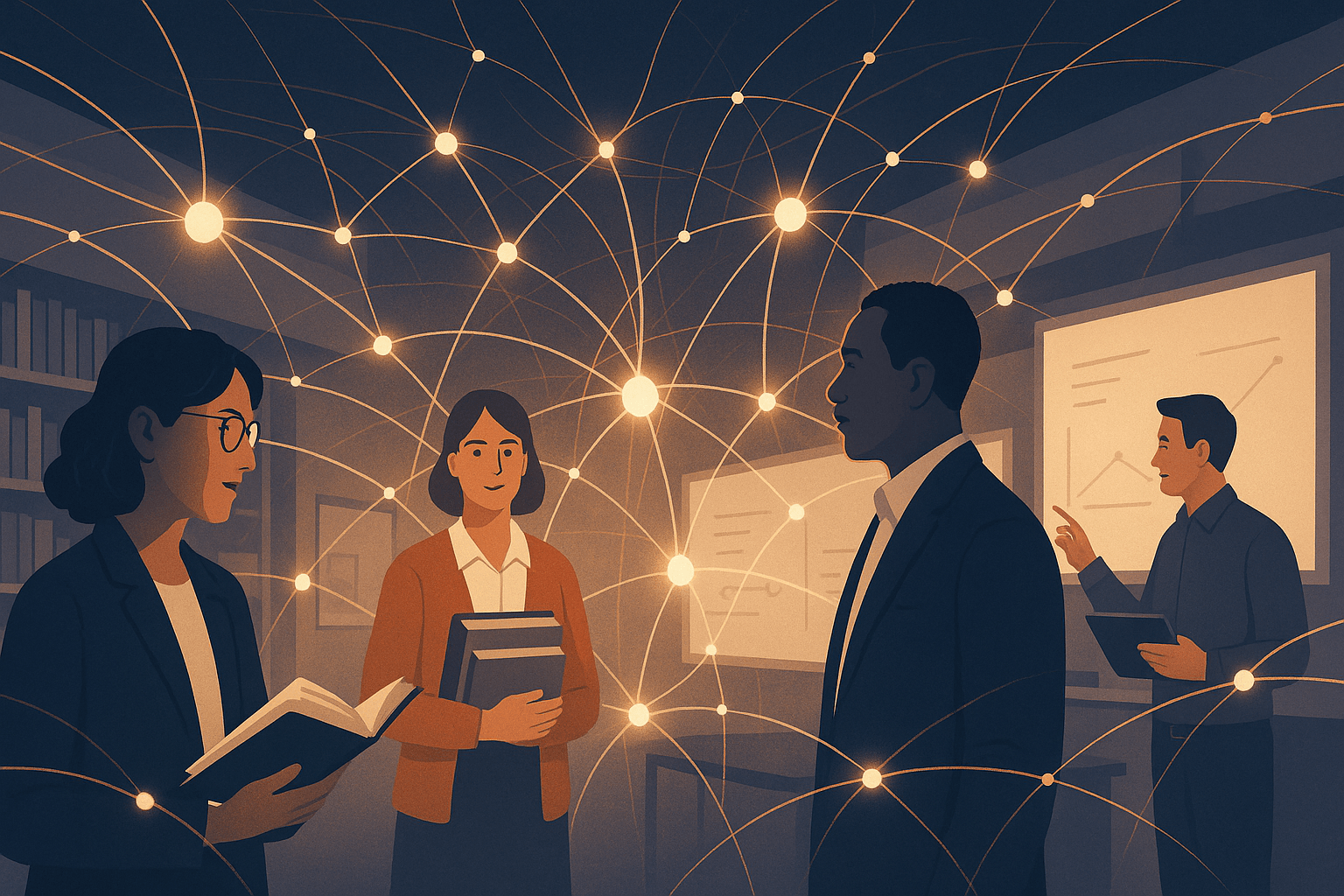


Information is abundant. Traditional learning models are obsolete. Yet most people still learn alone, managing knowledge in isolation.
Learning communities accelerate development beyond what individual effort achieves. This knowledge hub page consolidates our guides and resources on communities of learning as well as individual learning, knowledge management and growth.
What Are Learning Communities?
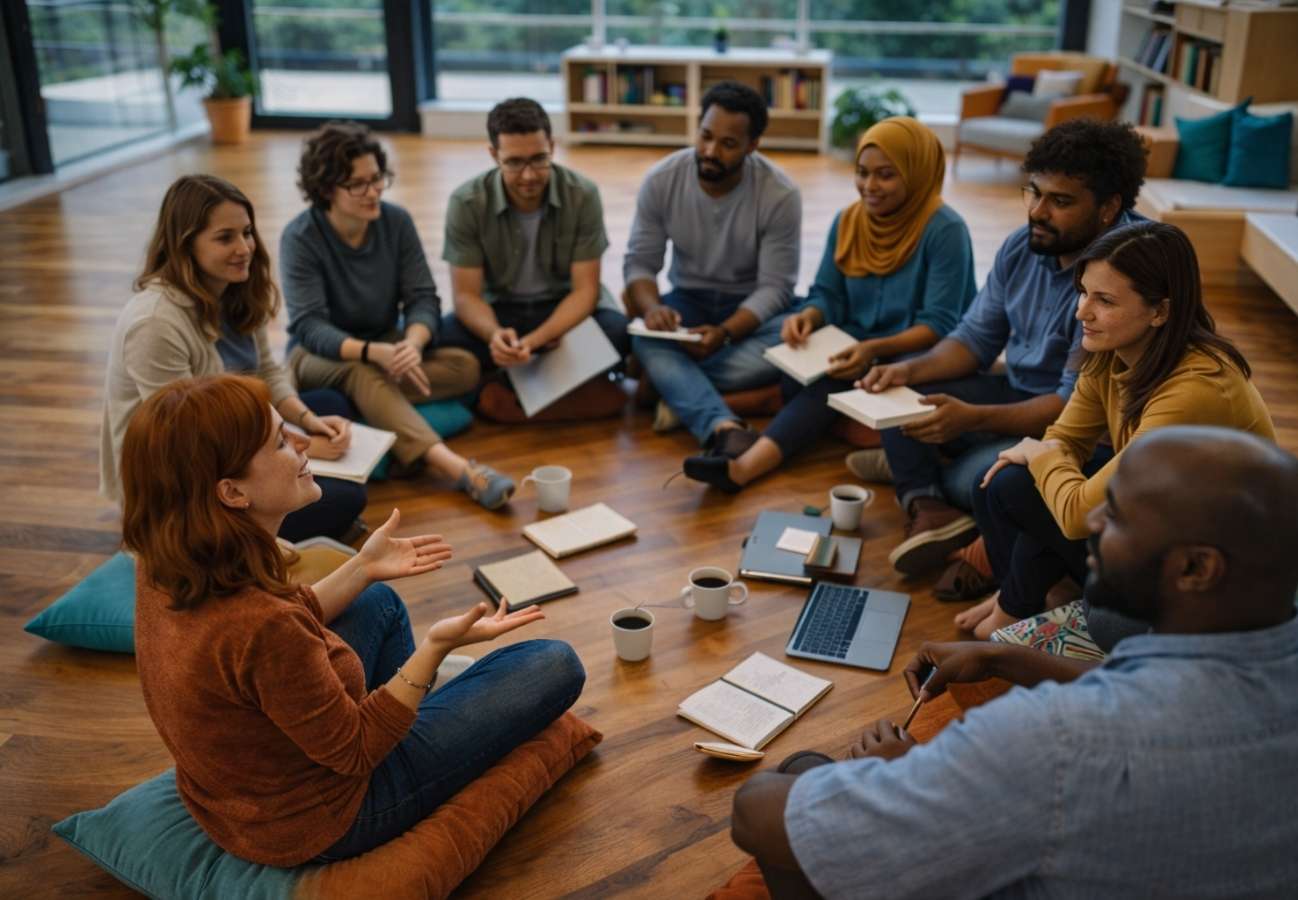
Learning communities are groups of people who meet regularly to learn together, share knowledge, and support each other's growth through collaborative inquiry. Members create deliberately designed ecosystems where they actively contribute, experiment, and build understanding collectively rather than passively consuming information alone.
Why Communities of Learning Transform Growth
Isolation limits development. When you learn alone, you're constrained by your own perspective and experience. You reinvent solutions others discovered, make avoidable mistakes, and miss insights from different domains.
Communities break these constraints through diverse perspectives, shared experiments, and collective inquiry. The result: faster learning, deeper understanding, and sustained growth that isolated effort cannot achieve.
Accelerated Learning Through Collective Intelligence
Communities create rapid feedback loops. Test something Monday, discuss results Wednesday, refine Friday. This iterative process accelerates development far beyond annual training or periodic courses.
Collective intelligence of groups consistently outperforms individual experts on complex problems. Communities draw on distributed expertise, surface hidden assumptions, and generate solutions no single member could create alone.
Knowledge Compounds Over Time
As communities generate insights, that knowledge gets captured and shared. Learning accumulates. New members benefit from documented wisdom. Returning members build on previous understanding rather than starting over.
This compounding effect separates communities from isolated learning. Your growth builds on collective knowledge while your contributions enrich others.
Personal Knowledge Management and Communities
Personal knowledge management (PKM) is the practice of capturing, organizing, and developing your knowledge systematically. It encompasses note-taking systems, information curation, concept linking, and knowledge synthesis.
While PKM is personal, it's dramatically enhanced through community. Sharing developing ideas provides feedback and sparks insights. Contributing to collective resources multiplies your learning's impact.
Building Your PKM System
Effective PKM starts with capturing information from diverse sources - books, articles, conversations, experiences, observations. But capturing isn't enough. You need systems for organizing knowledge, connecting related ideas, and synthesizing understanding.
Popular PKM approaches include:
- Zettelkasten method for linking atomic notes
- Digital gardens for growing knowledge publicly
- PARA method for organizing by actionability (Projects, Areas, Resources, Archives)
- Progressive summarization for distilling key insights
- Mind mapping for visualizing connections
The specific system matters less than consistent practice and connection to community.
From Personal to Collective Knowledge
The bridge between personal and collective knowledge management creates extraordinary value. When members document insights, share learning artifacts, and contribute to shared knowledge bases, everyone benefits.
Tools like wikis, collaborative note systems, and discussion platforms enable collective knowledge building. But tools alone don't create communities - intentional practices around contribution and curation make the difference.
Communities of Practice
Communities of practice (CoPs) are self-organizing groups who share passion for something they do and learn how to do it better through regular interaction. A group of developers sharing coding approaches, designers critiquing work together, or marketers discussing strategies all exemplify CoPs.
These communities operate on intrinsic motivation. People participate because they care deeply about the domain. This voluntary engagement creates powerful learning where tacit knowledge - the know-how difficult to articulate - gets shared naturally through storytelling and collaboration.
How CoPs Work in Organizations
Forward-thinking companies establish formal communities of practice to break down silos and accelerate knowledge sharing. These communities connect people across departmental boundaries who share interests and expertise.
Google's "20% time" allows employees to dedicate time to personal projects, fostering experimentation and knowledge sharing as people collaborate on side projects.
3M's "15% rule" empowers engineers to spend time on independent research, encouraging creativity and cross-pollination of ideas.
Spotify's "guilds" connect individuals with shared interests regardless of team assignments, allowing knowledge exchange across organizational boundaries.
Building Learning Organizations
Learning organizations are systems where people continuously expand capacity to create desired results, where collective aspiration is nurtured, and where people learn to see the whole together. Peter Senge pioneered this concept, showing how organizations can develop competitive advantages through learning.
Learning organizations aren't programs to implement - they're cultures to cultivate. This requires transforming how knowledge flows, how people collaborate, and how the organization captures and applies learning.
Organizational Knowledge Management
Knowledge management (KM) at organizational scale focuses on creating, sharing, using, and managing knowledge assets systematically. This includes documented procedures, recorded best practices, employee expertise, and embedded organizational capabilities.
Effective KM requires both technological systems (wikis, databases, collaboration platforms) and social processes (communities of practice, mentorship, knowledge-sharing norms). Technology enables access, but culture determines whether people contribute and use it.
Organizations that systematically manage knowledge develop sustainable competitive advantages. They onboard faster, innovate more effectively, and retain institutional wisdom when people leave.
Explore organizational learning principles: Learning Organizations
Breaking Down Organizational Silos
Silos stifle innovation and slow growth. When teams don't communicate, organizations reinvent solutions, duplicate effort, and miss opportunities for synergy.
Learning communities combat silos by creating cross-functional connections. When people from different departments share knowledge regularly, they identify integration opportunities, transfer best practices, and build holistic understanding.
Personal Learning Networks
Personal learning networks (PLNs) represent individual approaches to community-based learning. You deliberately cultivate connections with people, resources, and tools supporting continuous growth.
Your PLN might include mentors, peer learners, online communities, curated content sources, and collaborative platforms. You control what you learn, when, and from whom.
Building Your Personal Learning Network
Start by identifying people who inspire your thinking. Follow thought leaders in your domains of interest. Join online communities where practitioners share openly. Attend events where you'll meet peers pursuing similar growth.
Curate information sources deliberately. Not everything deserves attention. Choose quality over quantity. Build systems for capturing and organizing insights from your network.
Contribute actively, not just consume. Share your developing ideas, document your experiments, ask questions publicly. The more you contribute, the more your network reciprocates with insights and connections.
Technology-Enabled Learning Networks
Digital platforms enable learning networks transcending geography. Twitter communities, LinkedIn groups, Discord servers, and specialized forums connect you with experts worldwide.
Virtual learning networks offer diverse perspectives impossible in single locations. A rural practitioner learns from urban colleagues. Industry veterans share with newcomers. Geographic boundaries disappear.
Balance synchronous and asynchronous engagement. Live video calls create connection. Written exchanges allow reflection. Both matter for robust learning networks.
Communication Skills for Healthy Communities
Learning communities thrive or fail based on communication quality. How members interact determines whether the community becomes psychologically safe space for growth or deteriorates into performative sharing.
Explore our upcoming training on communication skills and norms to adopt within any group, circle or community: High-Fidelity Dialogue Training
Nonviolent Communication Framework
Nonviolent Communication (NVC) provides structure for honest dialogue that builds connection rather than defensiveness. NVC distinguishes observations from judgments, feelings from interpretations, needs from strategies.
When people practice NVC, they create space for authentic vulnerability - admitting uncertainty, sharing struggles, requesting support. This openness enables real transformation.
Explore further: Nonviolent Communication
Establishing Community Norms
Effective learning communities establish clear agreements early. Members commit to confidentiality, equal participation, assuming positive intent, and addressing conflicts directly.
These aren't bureaucratic rules - they're commitments enabling the risk-taking genuine learning requires. Without psychological safety, communities never move beyond surface-level sharing.
Review the list of essential communication protocols for all learning circles, groups and communities: Group Discussion Norms and Guidelines
Learning Communities in Education
Professional learning communities (PLCs) bring educators together regularly to examine student learning, share effective practices, and support each other's growth. Research consistently shows schools with strong learning communities see improved teacher retention and better student outcomes.
The Teacher Learning Challenge
For decades, educators adapted in isolation. But today's changes aren't incremental. AI and technology fundamentally alter what teaching means. Information abundance eliminates the teacher-as-information-deliverer model.
This shift requires personal transformation and updated practices. Most importantly, it demands community - space to challenge assumptions, reflect deeply, and support one another through change.
Explore educator transformation: Teacher Growth
Building School-Wide Learning Systems
School leaders building learning communities face distinct challenges. Time is educators' scarcest resource - communities cannot thrive squeezed into overloaded schedules.
Effective leaders build collaborative time into regular schedules, provide facilitation training, establish clear purposes without micromanaging, and model continuous learning themselves.
Related resources: School Leadership
How to Build Learning Communities
Whether starting a personal learning network, launching an organizational community of practice, or creating an educational learning community, certain principles apply.
Start Small and Intentional
Begin with 3-6 people who share genuine interest in learning together. Larger groups create coordination challenges. You can expand later.
Define shared purpose clearly. What will you learn together? What problems will you explore? Focus should be specific enough to guide work but broad enough to sustain interest.
Establish Rhythm and Structure
Meet regularly - weekly or biweekly. Consistency creates accountability and momentum. Protect this time against competing demands.
Use protocols to structure discussions. Frameworks prevent conversations from devolving into advice-giving or unfocused chat.
Ground Work in Evidence
Bring concrete artifacts to meetings - work products, data, documented experiments, captured insights. Evidence keeps conversations focused and reveals patterns.
Balance consumption with creation. Don't just discuss ideas from books. Generate knowledge through practice, document learning, contribute to collective understanding.
Create Psychological Safety
Establish norms around confidentiality, non-judgment, and supportive challenge. Agree that mistakes are learning opportunities and uncertainty is welcome.
Safety grows through consistent, respectful interaction focused on growth rather than evaluation. Practice nonviolent communication from day one.
Document and Share Learning
Capture insights as they emerge. Create shared knowledge bases where learning accumulates over time. This serves current and future members.
Share work-in-progress. Incomplete ideas invite feedback and spark insights. Communities learn together through making thinking visible.
Common Challenges and Solutions
Even well-designed communities encounter predictable obstacles.
Superficial Engagement
Some groups meet regularly but avoid difficult conversations. They share resources without examining practice or engage in pleasant but unproductive chat.
Combat superficiality by grounding every meeting in evidence. Require members to bring work artifacts. Use protocols structuring deep inquiry. Make vulnerability the norm through leaders modeling it first.
Uneven Participation
Some members naturally contribute more while others stay quiet. This imbalance creates resentment and limits learning.
Establish norms expecting everyone to contribute. Use structured protocols ensuring all share. Consider rotating facilitation. Check in periodically about participation patterns.
Time and Sustainability
Busy people struggle maintaining commitments. Initial enthusiasm fades when calendars fill.
Start with minimal viable commitments - 45 minutes biweekly beats ambitious weekly marathons that collapse. Build community value explicitly. Celebrate learning regularly to maintain motivation.
Measuring Community Impact
Communities should produce tangible value. Regular reflection maintains focus and guides evolution.
Individual Growth
Track how members develop. What new capabilities have you built? What problems can you now solve? How has practice evolved?
Self-reported growth matters because confidence enables risk-taking and persistence.
Collective Knowledge Development
Assess knowledge assets the community creates. What practices have you documented? What insights preserved? How accessible is collective wisdom?
Test whether someone new can access accumulated learning rather than starting from scratch.
Applied Learning
Ultimate measure is whether learning translates into changed practice and better outcomes. Are members applying new approaches? Are results improving?
Track both leading indicators (experimentation rates) and lagging indicators (outcome improvements).
Learning Communities at LearnButWhy
We're building learning communities supporting transformation across multiple contexts. Different communities serve different needs while sharing core principles.
For Educators: Professional Learning Community
Our flagship community brings together teachers and school leaders navigating the shift from industrial education models to brain-aligned, learner-centered approaches.
Education is undergoing radical transformation. AI fundamentally alters what teaching means. Yet teacher training programs didn't prepare for this reality. This work is best done in community.
What You'll Get:
- Live sessions with experts in neuroscience, educational technology, and transformation
- Process groups of 8-12 educators for deep reflection and support
- Frameworks for reflecting on teaching practice and identity
- AI and EdTech training for confident implementation
- Community grounded in nonviolent communication practices
Create Free Account for Early Access >>
For School Builders: Education Founders Circle
Founders of alternative schools, microschools and educational entrepreneurs face unique challenges. This community aims to provide space for honest conversation about building alternatives.
Members share resources, troubleshoot challenges and build relationships sustaining them through isolation.
Connect: Founders Circle
For Young Builders: Teen Builders Network
Young people building projects and creating meaningful work need communities supporting their agency.
This network aims to connect teen entrepreneurs and creatives with mentors and peer support.
Learn more: Teen Builders Network
For Organizations: Community Building Support
LearnButWhy supports schools designing and implementing learning communities. We provide framework training, facilitator development and ongoing support.
Resources for Building Learning Communities
Personal Knowledge & Growth:
- Self-Learning - Taking ownership of your learning journey
- 21st Century Skills - Capabilities for thriving in complexity
- Teacher Growth - Continuous development through reflection
Communication & Culture:
- Nonviolent Communication - Foundation for healthy communities
- Group Discussion Guidelines - Practical protocols for learning circles
Organizational Development:
- Learning Organizations - Peter Senge's principles for organizational learning
- School Leadership - Building learning systems in education
- Teacher Retention - Keeping talent through community
Transformation:
- Reimagining Education - Our approach to systemic change
- Education Beyond Fear - Creating psychologically safe learning
- Future-Ready Learning - Principles for an AI-driven world