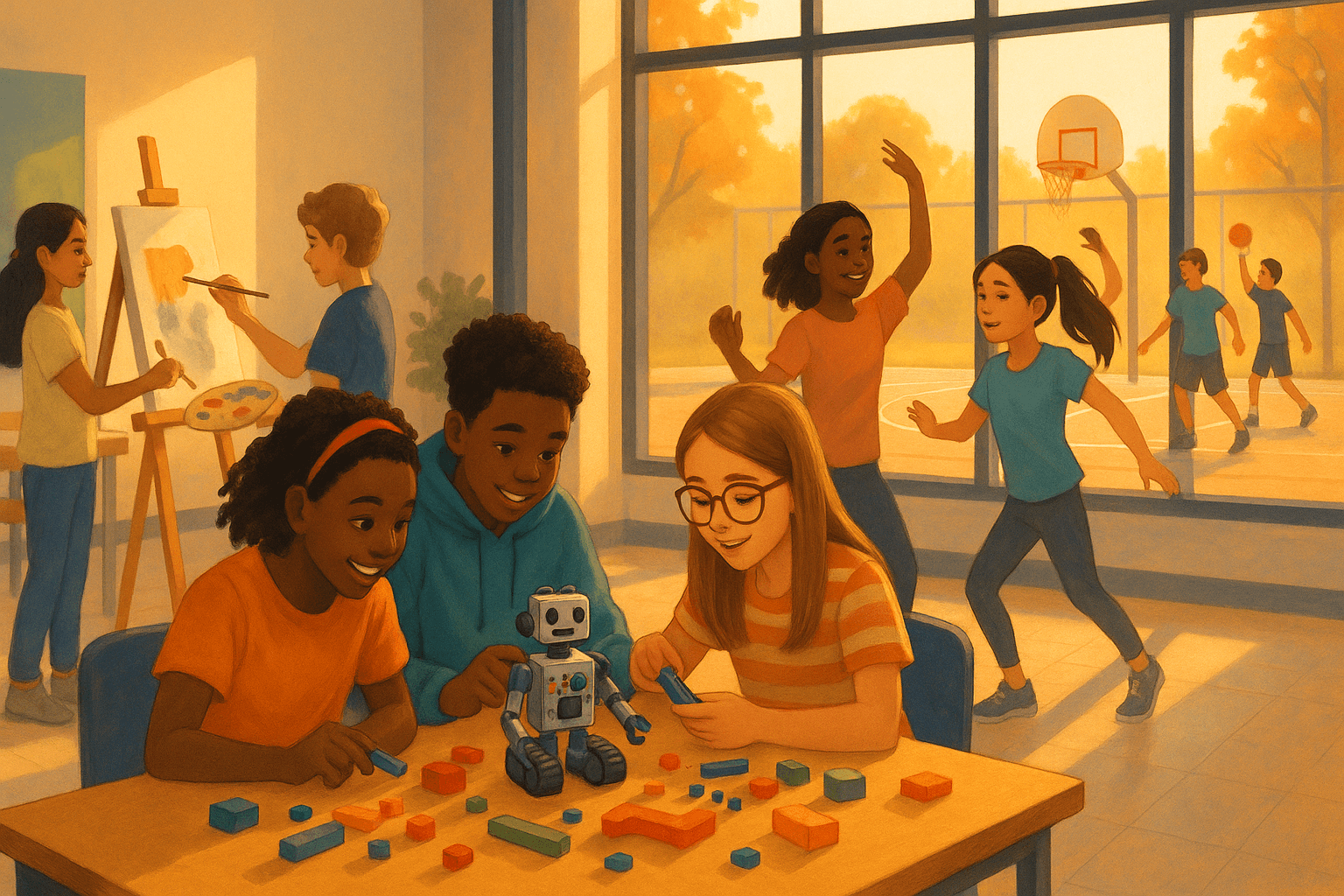


What Are Future-Ready Schools?
Future-ready schools prepare students for a world that doesn't yet exist. These learning environments prioritize adaptability, critical thinking, and continuous innovation over static content delivery. A future-ready school equips learners with skills to navigate uncertainty, solve complex problems, and contribute meaningfully to evolving workplaces and communities.
The concept extends beyond adding technology to classrooms. It requires rethinking how we structure learning, assess growth, and cultivate curiosity. Future-ready schools recognize that the half-life of knowledge shrinks constantly, making the ability to learn more valuable than any single fact.
Why Future-Ready Education Matters Now
The workplace students will enter looks radically different from the one their teachers experienced. Automation reshapes entire industries while new careers emerge that didn't exist five years ago. Students need preparation for jobs we can't name yet, using technologies not yet invented.
Traditional education models emphasize memorization and compliance. These served industrial-era needs but fall short in knowledge economies. Today's graduates face complex challenges requiring collaboration across disciplines, cultures, and continents. Climate change, global health, technological ethics—these problems demand creative, adaptive thinkers.
Research from the World Economic Forum identifies critical competencies for future success. Complex problem-solving, critical thinking, and creativity top the list. Emotional intelligence and cognitive flexibility follow closely. Schools clinging to outdated models leave students unprepared for these realities.
Connecting Future-Ready Schools to 21st Century Skills
The framework of 21st century skills provides concrete direction for future-ready education. These competencies fall into three broad categories that inform how schools should evolve.
Learning and Innovation Skills
Critical thinking sits at the foundation of future-ready learning. Students must analyze information, evaluate sources, and construct reasoned arguments. This goes deeper than finding correct answers—it means asking better questions.
Creativity and innovation require safe spaces for experimentation. Future-ready schools normalize failure as part of learning. Students prototype solutions, iterate based on feedback, and develop resilience when initial attempts fall short.
Collaboration skills prepare students for interdependent work environments. Group projects alone don't build this capacity. Students need explicit instruction in communication, conflict resolution, and leveraging diverse perspectives toward shared goals.
Digital and Information Literacy
Technology fluency extends beyond using devices. Students must understand how digital tools shape thinking, relationships, and society. They need skills to evaluate digital information critically and create responsibly with technology.
Information literacy becomes crucial as content proliferates exponentially. Students must distinguish credible sources from misinformation, synthesize information across formats, and apply knowledge to novel situations.
Life and Career Skills
Adaptability and flexibility matter more than ever before. Future-ready schools help students develop comfort with ambiguity. They learn to pivot when circumstances change and view disruption as opportunity rather than threat.
Initiative and self-direction enable lifelong learning. Students who wait for instructions struggle in dynamic environments. Future-ready education cultivates internal motivation and self-management capabilities.
Building a Culture of Curiosity and Innovation
Culture determines whether future-ready initiatives thrive or wither. Schools must intentionally cultivate environments where curiosity drives learning and innovation feels safe.
Inquiry-based learning shifts students from passive recipients to active investigators. Teachers pose authentic questions without predetermined answers. Students design investigations, gather evidence, and construct understanding through exploration.
This approach requires trust. Teachers must release some control, allowing students to pursue unexpected directions. The messiness of genuine inquiry challenges traditional classroom management, but the cognitive benefits justify the discomfort.
Creating Space for Experimentation
Innovation requires permission to try new approaches. Future-ready schools establish structures supporting calculated risk-taking. Makerspaces, design thinking protocols, and innovation labs provide frameworks for experimentation.
Failure must be reframed as data rather than defeat. When students present failed experiments, teachers ask what they learned, not what went wrong. This subtle shift normalizes iteration and builds resilience.
Celebration of creative attempts matters as much as celebrating success. Schools might showcase student prototypes regardless of outcome, emphasizing the thinking process over polished products.
Questioning Traditional Approaches
Future-ready schools examine inherited practices with fresh eyes. Why do we group students by age? Must learning happen in 50-minute blocks? Do letter grades serve learning or sorting?
These questions don't dismiss tradition disrespectfully. They recognize that practices designed for different contexts may not serve current needs. Thoughtful leaders question assumptions while honoring the educators who came before.
Some schools experiment with competency-based progression, allowing students to advance when they demonstrate mastery. Others blend grade levels for project-based learning. These innovations emerge from questioning inherited structures.
Adaptability as the Core Competency
If one skill defines future-readiness, adaptability leads the list. The capacity to adjust thinking, approaches, and goals when circumstances shift determines success across contexts.
Adaptability isn't innate—it develops through experience. Students need repeated opportunities to navigate change, receive feedback, and refine their responses. Schools can design these experiences intentionally rather than leaving them to chance.
Teaching Students to Navigate Uncertainty
Uncertainty triggers anxiety for many learners. Future-ready schools help students develop comfort with not knowing. Teachers model curiosity when facing unfamiliar problems and demonstrate strategies for working through ambiguity.
Project-based learning naturally introduces uncertainty. Real-world problems resist neat solutions. Students must gather information, test hypotheses, and adjust approaches as new data emerges.
Reflection practices help students recognize their growing adaptability. Journaling about how they handled unexpected challenges builds metacognitive awareness. Students begin seeing themselves as capable of navigating whatever comes.
Developing Growth Mindsets Across the Community
Carol Dweck's research on growth mindset provides crucial foundation for adaptability. Students who believe abilities develop through effort approach challenges differently than those viewing intelligence as fixed.
Future-ready schools embed growth mindset language throughout their culture. Feedback emphasizes effort and strategy over innate ability. Challenges are framed as opportunities to grow rather than tests of worth.
This mindset must extend beyond students to encompass all community members. Teachers, administrators, and families need growth orientation to support student development authentically.
Professional Learning Communities Drive School Evolution
Adults in the building must model the learning and adaptation they expect from students. Professional learning communities create structures for continuous educator growth and collaborative innovation.
Effective PLCs go beyond occasional meetings. They establish regular cycles of inquiry where teachers examine student work, test new approaches, and refine practices based on evidence.
Characteristics of Strong Professional Learning Communities
Shared vision and values unite community members. Teachers collectively define what future-ready learning looks like in their context. This shared understanding guides decision-making and resource allocation.
Collaborative culture replaces isolation. Teachers open their practice to colleagues, welcoming observation and feedback. This vulnerability requires psychological safety—trust that sharing struggles won't bring judgment.
Focus on results keeps PLCs grounded in student impact. Communities examine evidence of learning regularly, asking which practices move students forward. Data informs decisions without reducing education to numbers.
Continuous improvement becomes the norm rather than the exception. Teachers experiment with new strategies, assess impact, and refine approaches. This mirrors the adaptive capacity schools want students to develop.
Building Time and Structures for Collaboration
Meaningful collaboration requires dedicated time. Future-ready schools restructure schedules to prioritize professional learning. Some build common planning periods, others adjust student schedules to create collaborative blocks.
Protocols provide frameworks for productive collaboration. Structured conversations about student work, lesson planning, or problem-solving keep meetings focused and equitable. Everyone contributes; no voice dominates.
External expertise enriches internal collaboration. Schools might bring in coaches, consultants, or researchers to introduce new perspectives. The key is integrating outside knowledge with local context rather than implementing generic programs.
Leadership That Enables Future-Ready Transformation
School leaders set conditions that allow future-ready practices to flourish. Their role shifts from managing compliance to cultivating innovation and removing barriers to experimentation.
Effective leaders articulate compelling vision while inviting community input. They paint pictures of what's possible and connect daily work to larger purpose. This vision provides direction without prescribing every detail.
Distributed Leadership and Teacher Agency
Future-ready schools distribute leadership across the community. Teachers lead initiatives aligned with their passions and expertise. Students take leadership roles in their learning and school culture.
This distribution requires leaders to release control and trust community members. Principals become facilitators rather than sole decision-makers. They create conditions for others to lead while maintaining overall coherence.
Teacher agency matters tremendously for innovation. When educators feel empowered to try new approaches, creativity flourishes. Micromanagement kills innovation faster than any other factor.
Creating Conditions for Risk-Taking
Leaders must explicitly encourage experimentation and protect innovators from punitive consequences. When teachers try new approaches that don't work perfectly, leaders ask about learning rather than assigning blame.
Resource allocation signals priorities. Future-ready leaders invest in professional learning, collaboration time, and innovation support. They find creative ways to redirect resources toward future-focused initiatives.
Communication with families and community members helps build support for change. Leaders explain why traditional approaches may not serve students' future needs. They invite stakeholders into conversations about what future-ready means locally.
Leading Through Continuous Learning
Leaders model the learning they expect from others. They share their own professional growth, acknowledge mistakes, and demonstrate adaptation. This vulnerability builds trust and normalizes continuous improvement.
Staying current with research and trends helps leaders guide thoughtfully. They distinguish meaningful innovation from passing fads. Not every new idea deserves implementation, but worthy innovations need champion leaders.
Practical Steps Toward Becoming Future-Ready
Transformation doesn't happen overnight. Schools can take concrete steps that move them toward future-readiness while honoring current realities.
Start With Why
Engage the community in conversations about purpose. Why does your school exist? What do students need for their futures? How do current practices align with those needs?
These discussions surface assumptions and build shared understanding. They create foundation for change by connecting it to values everyone holds.
Audit Current Practices
Examine existing structures through a future-ready lens. Which practices develop adaptability, creativity, and critical thinking? Which primarily serve compliance or tradition?
This audit isn't about judging teachers. It's about honestly assessing whether current approaches prepare students for the world they'll inherit. Some traditional practices may serve future-ready goals; others may need rethinking.
Pilot and Learn
Start small with willing teachers. Pilot new approaches in limited contexts, gather evidence, and refine before expanding. This reduces risk while building proof of concept.
Document learning throughout pilots. What worked? What challenges emerged? How did students respond? This evidence informs scaling decisions and helps others learn from early adopters.
Invest in Professional Learning
Provide ongoing support for teachers developing new practices. One-time workshops rarely change practice. Sustained coaching, collaborative planning, and peer observation yield better results.
Connect professional learning to classroom application. Teachers should try new strategies with students between learning sessions, then return to discuss implementation with colleagues.
Redesign Assessment Approaches
Traditional tests measure narrow slices of learning. Future-ready schools develop assessments capturing deeper competencies like creativity, collaboration, and adaptive thinking.
Performance assessments, portfolios, and exhibitions allow students to demonstrate complex skills. These take more time than multiple-choice tests but provide richer evidence of learning.
Engage Students as Partners
Students offer valuable perspectives on what helps them learn. Future-ready schools create structures for student voice in decision-making. This might include student representation in governance or regular feedback on teaching practices.
When students co-design learning experiences, engagement and ownership increase. They develop agency and leadership while helping schools better meet their needs.
Addressing Common Challenges
Schools pursuing future-readiness encounter predictable obstacles. Anticipating these challenges helps leaders navigate them more effectively.
Balancing Innovation With Accountability
External accountability systems often emphasize traditional metrics. Schools must prepare students for standardized tests while developing broader competencies.
This tension is real but not insurmountable. Many future-ready practices improve traditional outcomes while building additional skills. Critical thinking supports test performance even as it prepares students for complex problem-solving.
Leaders must advocate for accountability systems that measure what matters. In the meantime, they can demonstrate that future-ready approaches don't sacrifice traditional achievement.
Managing Pace of Change
Change fatigue affects schools introducing too many initiatives simultaneously. Future-ready transformation requires sustained effort, not frantic activity.
Leaders should prioritize depth over breadth. Implementing fewer changes well beats superficial adoption of many innovations. Give initiatives time to take root before adding more.
Supporting All Teachers
Not every teacher embraces change at the same pace. Some eagerly experiment while others prefer proven approaches. Future-ready schools honor this diversity while moving everyone forward.
Meet teachers where they are. Provide differentiated support matching individual readiness and needs. Celebrate small steps rather than expecting immediate transformation.
Looking Forward
The future remains uncertain, which makes adaptability more crucial than prediction. Future-ready schools don't claim to know exactly what students will need. Instead, they cultivate capacities that serve learners across contexts.
This work requires courage. Questioning inherited practices and trying new approaches involves risk. But maintaining systems designed for a world that no longer exists carries greater risk.
Students deserve learning experiences that prepare them for their futures, not our pasts. Building future-ready schools honors their potential and our responsibility as educators. The work is challenging, ongoing, and absolutely essential.
Every school can move toward future-readiness from wherever it stands today. Small steps accumulate into meaningful transformation. The question isn't whether schools should become future-ready, but how quickly we can make it happen for the students counting on us.