


I've been speaking to young people in schools around me.
Their days are spent sitting and listening to information someone else chose for them to absorb. Constantly being assessed toward outcomes that others defined.
Very little of what they do starts with their own questions or requires dealing with real life. So they naturally find the content arbitrary and irrelevant to their immediate needs.
They attend "good" schools with caring teachers, but it's a pacifying experience.
Yes it keeps them safe and busy, and they surely learn to comply and deliver. But when do they actually learn in a way that shifts how they see themselves and the world around them?
Does this kind of learning come from instruction?
The brain learns through complex experience, not isolated content
The brain doesn't learn in isolation. It learns through "complex experience" - through doing, reacting, interacting, failing, reflecting. This requires situations where body, brain, and mind engage together in physical and social context.
When you're immersed in a real challenge that you care about, every part of you as a living system is involved. You're not only acquiring information.
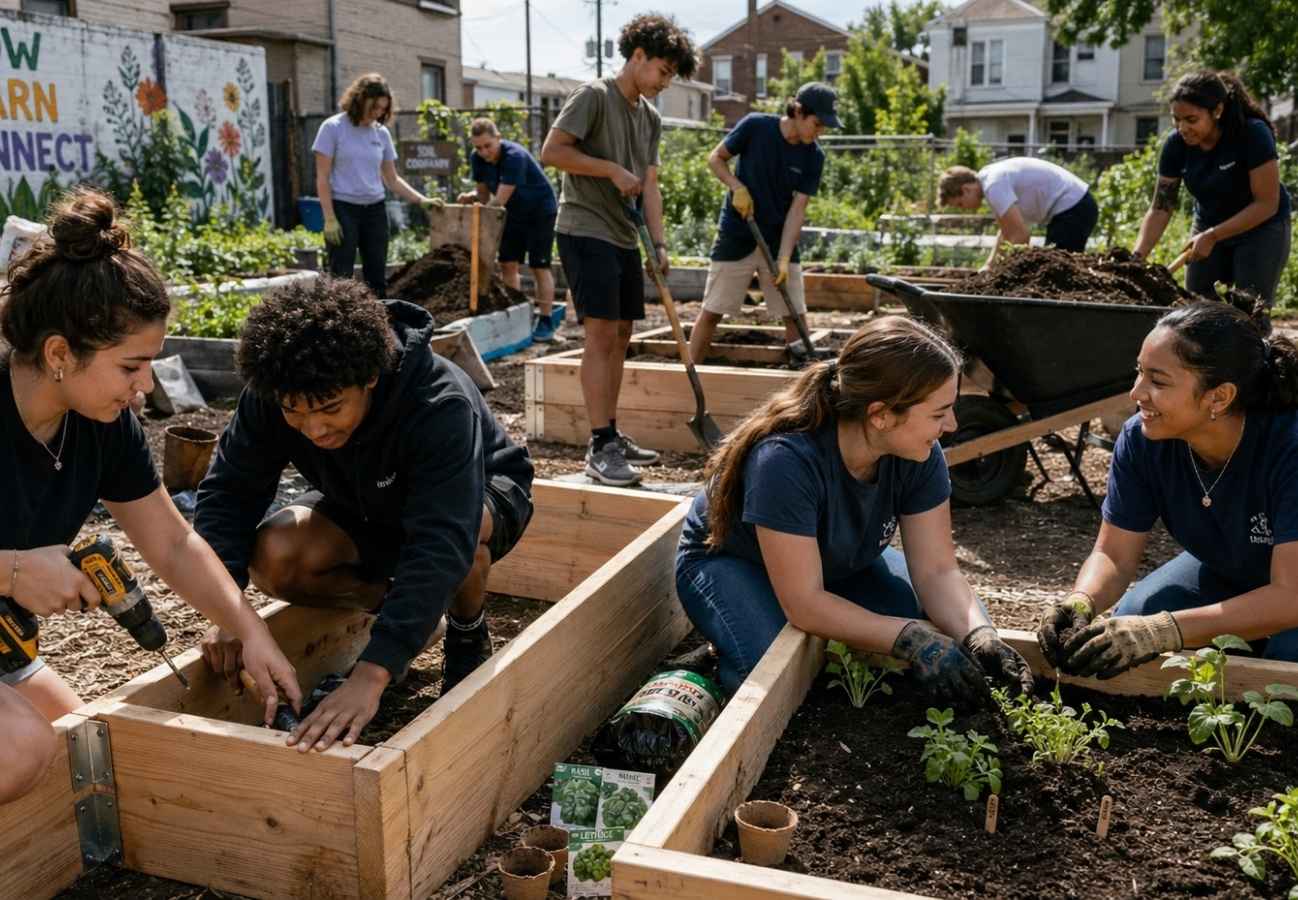
Not all experiences are equally "educational"
Some experiences change how people think and see themselves. Others are activities that keep students busy. Just throwing students into projects does not work the same.
Here's what makes the difference:
- Emotional safety
- Topics with depth and layers - with room for discovery
- Meaning, relevance, and genuine choice
- Real challenges with tangible outcomes
- Learning in relationship
- Reflection and processing
Emotional safety creates the conditions
Nothing else works without this foundation.
High challenge, low threat. You're stretched but safe enough to try, to fail, to bring yourself.
It makes a difference how we relate to outcomes, to success and failure, to each other. Whether people feel safe going beyond defined boundaries. Whether their ideas are heard.
Students won't take intellectual risks where they might be humiliated, where failure equals shame, where success is defined so narrowly most attempts don't count.
I benefit a lot from the works of Renate and Geoffrey Caine, who spent decades implementing brain-based learning principles in schools and classrooms. They call this state "relaxed alertness" - the optimal condition for learning.
Choose themes with depth and layers - then leave room for discovery
Learning experiences work best when they have layers - surface content, underlying concepts, bigger connecting ideas.
When we choose something with depth, students can enter at different levels. And if we leave room - time for immersion, for getting lost - they can then discover things we didn't plan.
Over-structuring kills emergence. Script every step and deliverable in advance, and you risk losing the unexpected connections.
It has to matter - meaning, relevance, genuine choice
Most "experiential learning" fails here. They become assigned projects.
Teacher picks the topic, defines parameters and sets success criteria. Student executes someone else's plan.
Meaning can't be imposed. Relevance isn't something to convince students about. Without choice and agency, we lose relevance. Without relevance, the brain doesn't fully engage.
Students need genuine voice in shaping what they work on. Not choices between a few pre-approved options. They need real agency to pursue what connects to questions they're living with.
Real challenges with tangible outcomes
Learning is deeper where challenge is real, dilemmas genuine, stakes meaningful.
This connects to constructive adversity. Intentional engagement with challenges that push beyond what you already know how to do. Not arbitrary difficulty or stress for its own sake, but real problems worth solving.
And these challenges work best when they produce something tangible and meaningful. You build something, solve something, create something that exists in the world.
Learning happens in relationship
We learn by positioning ourselves in relation to things.
In relation to ideas - how does this connect to what I know? How does it challenge my assumptions?
In relation to people - working with mentors, peers, stakeholders. Seeing how others approach the same challenge. Getting feedback that shifts thinking.
In relation to challenges - understanding my reactions, discovering patterns in how I navigate difficulty.
"I can observe myself only in relationship because all life is relationship... I exist only in relationship to people, things and ideas, and in studying my relationship to outward things and people, as well as to inward things, I begin to understand myself." - Jiddu Krishnamurti
Genuine collaboration matters. That means people who bring different perspectives, expertise, stakes in the outcome.
Reflection and processing
We make the most of an experience when we have the chance to actively reflect on it.
Making sense. Receiving feedback. Questioning. Examining. Digesting.
Without this, experience may involve lots of doing with little integration.
Reflection helps transforms experience into learning. This is where we notice patterns. Make connections. Understand what worked and why.
We need to have space to think about what we're experiencing while experiencing it. Actual time to pause, consider, process with others, return to questions that emerged.
What counts as a worthy experience?
True learning experiences do not have to be limited to school projects. Settings could vary:
- A young person traveling alone. Navigating a new place, managing resources, dealing with the unexpected.
- An intern working alongside professionals. Contributing to real work, seeing how experts think.
- An artist apprenticing with a mentor. Co-creating, learning the craft through practice.
- Students tackling a social problem in their community. Researching, proposing solutions, facing real constraints.
- Building programs, websites, apps to go live and provide real value.
We need to intentionally design for this
Traditional school design rarely leaves room for true learning experiences.
It's not patient enough and inherently mistrusts the learning capacity of students. So it structures everything - and does so around "delivery of knowledge" rather than discovery through experience.
Real learning experiences require different design. Time and space structured differently. Different relationships between adults and young people.
Adults shifting from content delivery to experience design. From controlling learning to facilitating discovery.
There's also an opportunity to connect with resources beyond the classroom. Artists, businesses, scientists in the community. Real problems and actual audiences for student work. These can enrich experiences when it makes sense.
The challenge is in building systems that make these experiences possible - not for a few students in special programs, but as the core of how learning happens.
Where are you in this shift?
Most people navigating this transformation start without a clear picture of where they are, what's working or what's ready to shift.
That's why we built the Mindset Assessment around the Mindshift Spiral. It only takes 8-10 minutes.